
2026 Region 2 Conference
Keynote and Luncheon 12-1:15
Opening Remarks by Caroline Hendrie, Executive Director of the Society for Professional Journalists. After decades as a working journalist at the local, state and national levels, Caroline Hendrie moved into a career as a national journalism organization leader.
In her current role as executive director of both the Society of Professional Journalists and its sister organization, the SPJ Foundation, she works to advance SPJ’s mission as a champion for journalists and advocate for press freedom.
Prior to SPJ, Caroline was a longtime leader in the national education journalism sector, having served 12 years as executive director of the Education Writers Association and 14 years at the nonprofit news organization Education Week, where she left as managing editor.
Earlier in her career, she worked as a reporter and editor at daily newspapers in New Jersey and Connecticut. She lives in the Washington, D.C., area with her family, including a very frisky Shetland Sheepdog.
Introduction to SciLine by Matt DeRienzo. Matt DeRienzo has worked in journalism for more than 30 years as a reporter, editor, publisher, teacher, and journalism nonprofit executive director. While editor-in-chief of the Center for Public Integrity, the nonprofit investigative newsroom’s work led to numerous changes in local, state, and federal policy and was recognized with some of journalism’s highest honors, including a national Edward R. Murrow Award for General Excellence and a Peabody nomination.
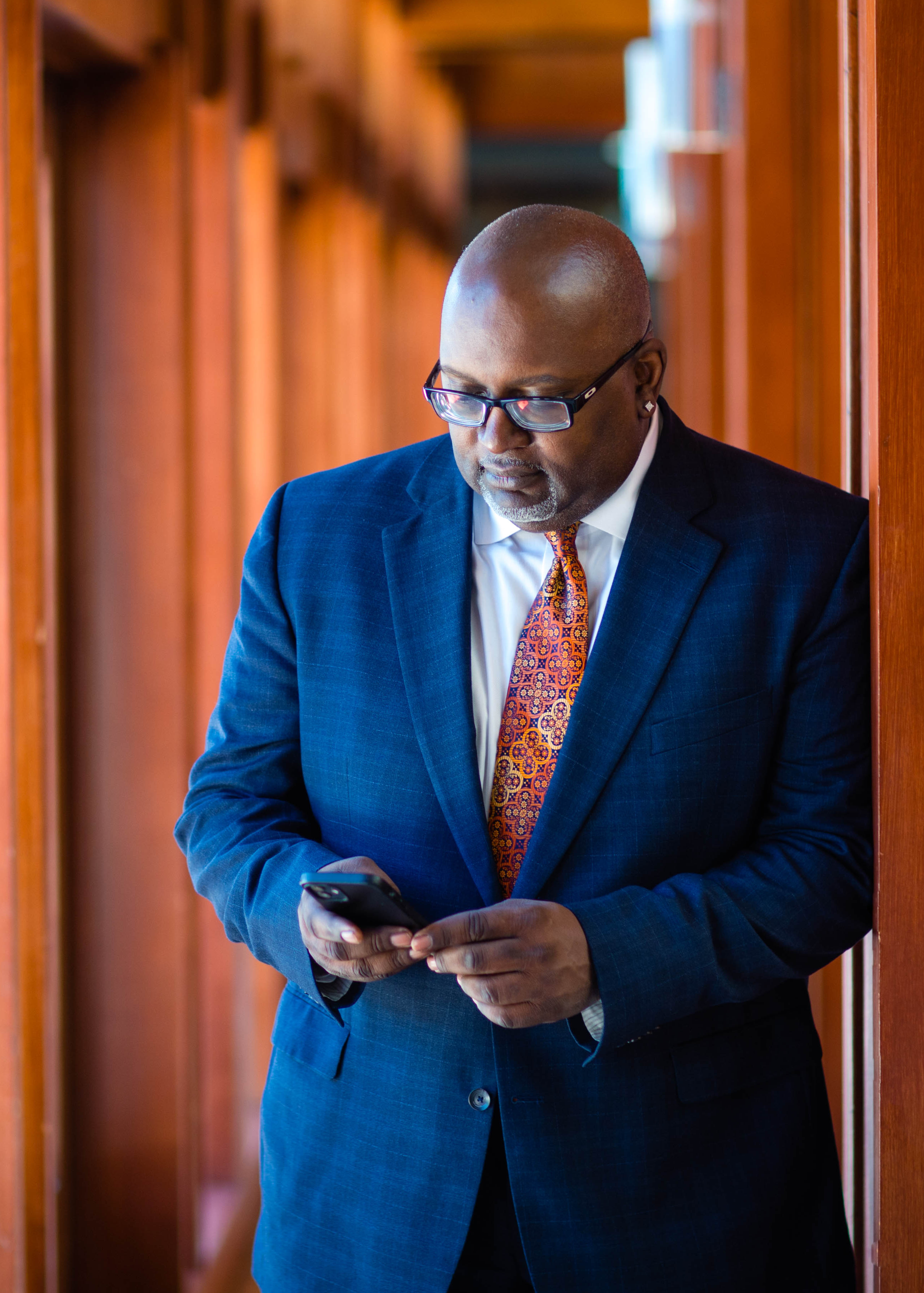
Eric Deggans, Knight Professor of Journalism and Media Ethics at Washington and Lee University in Virginia, overseeing classes on media issues, ethics and journalism. He also organizes and leads the school’s Ethics Institutes twice a year, bringing experienced journalism professionals together with students for a two-day conference, dissecting issues and exploring cutting edge concepts in the field. He is also a critic-at-large at NPR.
Eric is also a guest instructor and member of the National Advisory Board for the Poynter Institute for Media Studies in St. Petersburg, FL, appearing as guest host, interviewer or pundit on shows for CNN, MSNBC, PBS and other outlets. He came to NPR from the Tampa Bay Times newspaper in Florida, where he served as TV/Media Critic and in other roles for nearly 20 years. A professional journalist since 1990, he is the author of Race-Baiter: How the Media Wields Dangerous Words to Divide a Nation, a look at how prejudice, racism and sexism fuels some elements of modern media, published in October 2012 by Palgrave Macmillan.
A native of Gary, Indiana, Eric was inducted in 2024 into the Indiana Journalism Hall of Fame. He has also served as a moderator for discussions organized by the Smithsonian Institution, the National Endowment for the Arts, The National Book Festival, the Chautauqua Institute and the South By Southwest conference. He has earned the Distinguished Alumni Service Award from Indiana University – the institution’s highest alumni honor. In 2019, Eric became the first African American to serve as chairman for the jurors who select the George Foster Peabody Awards for excellence in electronic media at the University of Georgia; his one-year tenure capped a total six years he served on the board of jurors.
Workshops Session 1 | 1:30 to 2:45
VERTICAL VIDEO PANEL
How to connect with audiences through video
Learn how to shoot and produce vertical video for platforms such as TikTok, Instagram Reels and YouTube Shorts. As audiences increasingly consume news on mobile devices and social platforms, newsrooms are adopting this new format for on-the-ground reporting, explainers and breaking news.This session offers hands-on experience and insights for newsrooms, students and creators who want to engage audiences, build credibility and inform communities.
Tim McPhillips is a Multiplatform Reporter/Producer at PBS News/PBS News Hour, working both in front of the camera and behind it to tell stories across News Hour’s digital and broadcast platforms. He’s reported from political conventions, campaign rallies, protests, baseball games and UNESCO World Heritage sites, across topics such as artificial intelligence, immigration, sports gambling, airline safety and more. When not producing an original piece, Tim works with News Hour correspondents to amplify their reporting and to produce breaking news videos to PBS News’ nearly 15 million followers across digital platforms.
Emily Richardson is a digital content producer at CBS 6 WTVR-TV in Richmond, where she does independent reporting, digital management and runs social media. Emily has helped grow the station’s TikTok audience to almost 100,000 followers since she started working there in September 2024. Before that Emily was a Carnegie -Knight News 21 Fellow through the Walter Cronkite School of Journalism and Mass Communication. She graduated in 2024 from the Richard T. Robertson School of Communication at VCU, where she held multiple internship positions with the communications team, and editorial positions with Her Campus.
Kyle Russo is a video editor, audience strategist and social media specialist. He’s created content for The Washington Post, Semafor, The John F. Kennedy Center for the Performing Arts and more. Recently, he joined the team at PBS Frontline to ramp up their social media strategy. He is a graduate of the University of Maryland’s Philip Merrill College of Journalism. Ask him about his Spotify Wrapped!
GOING SOLO
You don’t need a job at a news organization to make a living as a journalist. You can freelance – or self-publish (and monetize) your work on Substack, YouTube and other platforms.Being an independent journalist requires planning and branding, but you won’t have to worry about layoffs and other turmoil in today’s corporate media environment. Hear from journalists who’ve been successful going solo.
Hadley Chittum is a freelance documentary photographer from the Appalachian mountains of Southwest Virginia and is currently based in Richmond, Virginia. Her personal projects are crafted with empathy and a desire to address the complexities of the criminal justice system and challenge how society views those that have been wronged by it. You can find her work in publications like the Guardian, the New York Times, Teen Vogue, Virginia Public Media, the Wall Street Journal and more. Outside of the journalism world she is a stained glass artist, server, and reality tv connoisseur.
Brandon Jarvis is a former freelance journalist who founded Virginia Scope in 2020 when freelance opportunities dried up due to the pandemic. The publication has since grown to more than 17,000 subscribers, using Substack newsletters to expand its audience. He is a graduate of Virginia Commonwealth University and has lived in Central Virginia his entire life.
Leah Small is a freelance journalist who has previously worked in newsrooms in central Virginia and as a science writer for Virginia Commonwealth University, where she covered innovations across numerous fields — including topics as far afield as the use of gold compounds in HIV drug development, and oyster restoration projects in the Chesapeake. Leah produces stories for online, print and radio, on topics in science, health and public policy. She has bylines in Scientific American, The Guardian, New York Times, VPM, WHRO and other outlets.
Derick Waller is a five-time Emmy Award-winning journalist and communications strategist with more than 15 years of experience covering some of the most consequential stories in recent American history — from the Trump Manhattan criminal trial and the Harvey Weinstein verdict to daily coverage of the COVID-19 pandemic as it gripped New York City. A former on-air correspondent at ABC7 New York and CBS News New York, Derick now leads Waller Media LLC, a media strategy and video production firm helping executives and law firms communicate with clarity and impact. He also runs Derick Waller Reports, an independent journalism outlet covering New York City politics, policy, and media. A proud VCU alumnus with degrees in Journalism and Political Science, Derick returns to his alma mater with a career that started in local TV newsrooms and has now evolved to working independently.
PUSHING PAST THE FOIA WALL
Pushing Past the FOIA Wall: Data Centers, ICE and Criminal Justice records
How to use the Freedom of Information Act to investigate technology issues such as data centers and surveillance cameras, along with other records to hold leaders accountable and keep communities informed.
Andrew T. Bodoh is an accomplished Virginia litigator known for creative and strategic advocacy in civil rights, constitutional law, insurance coverage, defamation, and appellate matters. He regularly represents citizens in Freedom of Information Act (FOIA) cases, protecting public access to records and government accountability through disciplined litigation. Andrew has handled numerous high-impact cases involving civil liberties, law enforcement accountability, insurance disputes, and public transparency. His FOIA litigation includes appellate-level victories and published decisions ordering disclosure of public records, as well as cases resulting in attorney fee awards and statutory penalties. In addition to litigation, Andrew is a recognized author and commentator on constitutional law and Virginia FOIA. He is the author of The Virginian’s Guide to FOIA and has published scholarly articles cited by Virginia courts, reflecting his depth of legal analysis and subject-matter authority.
Eric Bonds is a professor of sociology at the University of Mary Washington in Fredericksburg, Virginia. He was recently selected for the Virginia Coalition for Open Government’s 2026 Laurence E. Richardson Citizen Award for his advocacy of greater transparency in data center development and for creating student research opportunities using Virginia’s Freedom of Information Act.
Maria Everett, VCOG Board and former director of Va FOIA Council
Workshops Session 2 | 3:00 to 4:15
MINDING THE GAP
After The Washington Post laid off more than 300 employees, eliminating its sports desk and cutting back on local news, other media organizations mobilized to help fill gaps in coverage. Learn from presenters who have helped keep local news alive in communities across Region 2, and how student reporters are rolling up their sleeves to contribute too.
Kevin Grant is executive director of the Allbritton Journalism Institute, a nonpartisan nonprofit where next-gen journalists work side-by-side with veteran reporters and editors at NOTUS to cover power and policy in Washington, D.C. He co-founded The GroundTruth Project (now Rebuild Local), home to Report for America and Report for the World, pioneering service journalism initiatives that have created 1,000 full-time reporting positions in 40 countries. Previously he led more than 300 journalism fellowships in 50 countries based on a model he co-developed at GlobalPost.
Andrew Kerley is executive editor of The Commonwealth Times, the free, independent, student-run newspaper at Virginia Commonwealth University. His team has expanded to create video and podcast content, a features section, Spanish translated coverage and a streamlined hard news operation. Kerley previously served as audience editor for The CT. He also was the senior copy editor for alternative student publication Ink Magazine and president of the Society of Professional Journalists at VCU. He has had reporting stints with Virginia Scope, WTVR CBS 6 and VCU Capital News Service.
Michael Phillips is the founding editor of The Richmonder, a local news site that launched in Sept. 2024 with a mission to spotlight the best of the community, while keeping a watchful eye on those in power. The Richmonder is a nonprofit that believes accurate, unbiased information creates connection and community. Before The Richmonder, Phillips spent 16 years at The Richmond Times-Dispatch, serving as a sports reporter, sports editor, senior editor and interim managing editor. He was named the Virginia Sportswriter of the Year in 2022.
INTERNSHIP TO JOB PIPELINE
This panel will cover semester-vs.-summer internships; the application process; financial considerations,including financial support such as the Virginia SPJ,SDX Educational Foundation’s fellowship program; how to stand out as both an applicant and an intern; and the prospects for jumping from intern to employee. The session also will highlight premiere internship programs offered by groups like the Dow Jones New Fund and Report for America.
Chris Coates, Richmond Times Dispatch
Emily R. Condon is an early career journalist and the interim SPJ MD-Pro president. Currently, she is working at CNN DC as a news associate in a 15-month rotational newsroom program, completing tasks in production assistance for the CNN broadcast shows and also newsgathering efforts for the network and CNN.com. Condon graduated from the journalism school at The University of Maryland, College Park in May 2025 with her bachelor’s degree, where she served as the student SPJ chapter programming chair and then chapter president. During her college years, she completed four internships as a news intern with WBFF/FOX 45 News in Baltimore, a social media intern with NBC News in NYC, a newsgathering intern with CNN DC and then as an audience strategy/social media intern with The Washington Post. She also worked with Capital News Service, her college’s capstone course wire service, as a political reporter at the 2024 Republican and Democratic National Conventions in Milwaukee and Chicago. In addition to SPJ, Condon is a member of the academic task force for Investigative Reporters & Editors and a general member of Video Consortium.
Victoria A. Ifatusin, education reporter at The Richmonder.
THE AI MOMENT: What is at stake for journalists
Artificial intelligence is changing how journalism is produced, distributed and consumed. This session examines how reporters can use AI tools to improve efficiency and strengthen their work, while navigating the ethical challenges these technologies present. Participants will learn practical applications for reporting and leave with a clearer understanding of how to use AI responsibly. Moderated by Phillip Lewis, Huffpost front page senior editor and president of the Washington Association for Black Journalists.
Dr. Stephen J. McConnell is an award-winning educator, journalist, and researcher who is the AI Program Coordinator at New York University’s Center for Publishing, Writing, and Media. He also teaches at the Hussman School of Journalism and Media at The University of North Carolina-Chapel Hill.
For his teaching and research, he focuses on the intersections of AI, communication work, storytelling, and productivity. His academic and public scholarship examines human–AI interactions and the responsible, ethical use of AI. On these and other topics, he has delivered keynotes, served on panels, and appeared in media outlets, including public radio. He is currently writing a book for educators, students, and industry professionals on learning and working with AI.
Derek Willis, one of the nation’s leading data journalists and an experienced educator. He currently teaches data and computational journalism at the Philip Merrill College of Journalism.
Willis came to Merrill College having spent 25 years winning awards at some of the top news outlets in the country. His latest stop was ProPublica, where he served as a news applications developer since 2015. He previously held interactive journalism roles with The New York Times and The Washington Post, after working as a database reporter for The Washington Post, The Center for Public Integrity, Congressional Quarterly and The Palm Beach Post. Willis focuses on teaching the next generation of journalists how to use data in innovative and compelling ways.
Mark of Excellence Awards | 4:30 to 5:30
Emceed by Robin Reed
Robin Reed is a journalist and was a lead news anchor and chief meteorologist at WDBJ-DT in Roanoke, Virginia for over 40 years until his retirement in December 2022. Today Reed is Robin Reed is a professor of practice in the School of Communication at Virginia Tech.
Networking and Reception | 5:30 to 6:30
Reception sponsored by SciLine, a free service for journalists and scientists based at the American Association for the Advancement of Science (AAAS), the world’s largest multidisciplinary scientific society. Editorially independent, nonpartisan, and funded by philanthropies, SciLine has the singular mission of enhancing the amount and quality of scientific evidence in news stories.

 SPJVA Today
You must be logged in to post a comment.